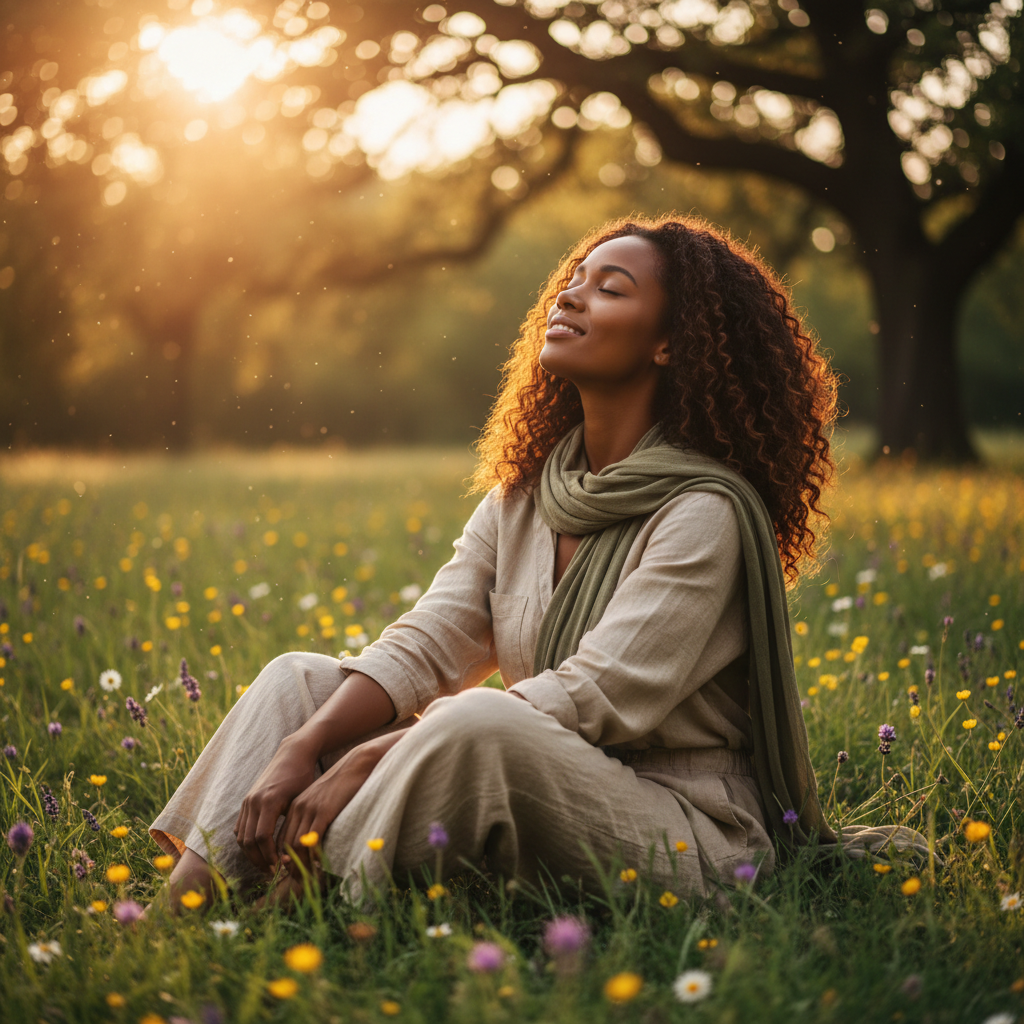
Project 120 is a nature-led wellness movement inviting you to reclaim your presence — 120 intentional minutes at a time.
Evidence-Informed
The Science Behind 120
Project 120 isn't a wellness trend — it's built on a growing body of research showing that regular, intentional time outdoors genuinely supports mental and physical well-being. Here's the evidence behind the practices we recommend, gathered in one place.
120 minutes a week
The 120-minute weekly benchmark is the heartbeat of Project 120. It's an achievable target that turns good intentions into a repeatable rhythm — the kind of consistency behavior-change research favors over occasional big efforts.
Presence over performance
The goal isn't exercise output or step counts. Time spent present in natural settings — noticing, breathing, touching — is what the research on attention restoration and stress reduction points to as restorative.
Small doses, often
Short, frequent outdoor moments tend to compound. A daily 15–20 minute practice often does more for sustained well-being than one long weekly hike that's hard to repeat.
Peer-Reviewed, Research-Backed Sprints
Every sprint is grounded in evidence
Gardening· Easy
Garden Hands Sprint
Gardening is one of the oldest ways humans have connected with nature — and one of the most researched. When your hands meet soil, something settles. This sprint invites you to tend something living, whether you have a backyard garden, a balcony pot, or a single windowsill plant. The practice isn't about growing the perfect tomato. It's about remembering that you're part of something growing.
What the research suggests
Horticultural therapy research shows that contact with soil and gardening activity reduces cortisol levels and improves mood more effectively than passive relaxation. A 2011 study found that a 30-minute gardening session produced greater drops in salivary cortisol and larger mood improvements than reading indoors, suggesting that active engagement with living things offers unique restorative benefits.
Source: van den Berg, A. E., & Custers, M. H. (2011). Gardening promotes neuroendocrine and affective restoration from stress. Journal of Health Psychology, 16(1), 3–15.Learn more
Sunset· Easy
Golden Hour Sprint
The end of the day is usually where presence falls apart — we scroll, we plan, we carry tomorrow's weight into tonight. The golden hour offers a different ending. For five days, you'll meet the sunset on purpose, letting the fading light collect the day and release it. This is a small ritual with a big effect: it trains you to close chapters instead of dragging them forward.
What the research suggests
Experiences of awe — frequently triggered by vast, beautiful natural phenomena like sunsets — have been shown to expand perception, reduce stress, and increase prosocial behavior. Research on awe finds that it diminishes self-focus and increases a sense of connection to something larger, which in turn improves well-being and life satisfaction.
Source: Piff, P. K., Dietze, P., Feinberg, M., Stancato, D. M., & Keltner, D. (2015). Awe, the small self, and prosocial behavior. Journal of Personality and Social Psychology, 108(6), 883–899.Learn more
Kids· Moderate
Neighborhood Naturalist Sprint
You don't need to travel to find nature — it's thriving in the cracks of sidewalks, the branches of street trees, and the soil of your backyard. This sprint trains you and your family to see the everyday wilderness that surrounds you, turning ordinary walks into expeditions of discovery.
What the research suggests
Children who regularly engage with nearby nature show improved focus, reduced stress, and greater creativity. Researcher Richard Louv coined the term 'nature deficit disorder' to describe the costs of disconnection from the natural world, particularly for children.
Source: Louv, R. (2008). Last Child in the Woods: Saving Our Children from Nature-Deficit Disorder. Algonquin Books.Learn more
Workplace· Easy
Lunch Outside Sprint
The lunch break has become a casualty of modern work culture. Eating at your desk, scrolling through your phone, or skipping it entirely. This sprint helps you reclaim those 20 minutes as a daily reset — fresh air, real food, and a mental break that makes you more productive, not less.
What the research suggests
Exposure to natural light during midday helps regulate circadian rhythms and improves afternoon alertness. Research from the University of Michigan found that even brief nature exposure during work breaks restored attention and reduced fatigue.
Source: Rosa, C. D., et al. (2021). Benefits of nature contact during lunch breaks on well-being at work. Journal of Environmental Psychology, 74, 101561.
Walking· Beginner
The Quiet Walk Sprint
Most of us walk while distracted — listening to podcasts, scrolling, or mentally planning our day. This sprint helps you rediscover walking as a practice of presence, not just transportation. When you remove the noise, the walk becomes the meditation.
What the research suggests
Studies show that walking in nature without external stimulation reduces rumination and negative thought patterns. A 2015 Stanford study found that walking in green spaces compared to urban environments decreased activity in the brain's subgenual prefrontal cortex, a region linked to depressive rumination.
Source: Bratman, G. N., et al. (2015). Nature experience reduces rumination and subgenual prefrontal cortex activation. Proceedings of the National Academy of Sciences, 112(28), 8567–8572.Learn more
Mental Health· Easy
Morning Light Sprint
Morning light is one of the most powerful, free wellness tools available. It sets your circadian rhythm, boosts mood-regulating hormones, and improves sleep that night. This sprint turns a 10-minute morning step outside into a life-changing habit.
What the research suggests
Morning sunlight exposure within 30-60 minutes of waking triggers a cascade of biological benefits: cortisol release for healthy alertness, serotonin production for mood, and dopamine for motivation. Research shows consistent morning light exposure improves sleep quality and reduces symptoms of seasonal depression.
Source: Huberman, A. (2022). The science of light, circadian rhythms and mental health. Stanford School of Medicine.Learn more
The Weekly Evidence
Why each weekly practice matters
inherent worthiness
The Science of Self-Compassion
Studies in positive psychology suggest that treating yourself with the same kindness you offer a friend lowers cortisol levels and builds resilience against burnout. When we drop the internal critic, our nervous system moves from a state of 'fight or flight' into 'rest and digest.'
Nature acts as a physical mirror for this process. By placing ourselves in environments that don't demand our labor, we train our brains to recognize that our value is inherent rather than transactional.
inhabiting not owning
Inhabiting, Not Owning
Most of us live in a mindset of ownership: my apartment, my schedule, my identity, my brand. This is a mindset that turns space into property, and property into isolation. We live inside our own boundaries, defending them from the outside.
But there is a different way to relate to space. The outdoors isn't ownable in the same way. You cannot seal it, brand it, or defend it. You can only inhabit it — briefly, loosely, alongside others and their versions of nature. This is a fundamentally different relationship with space.
When you step outside, you step out of ownership and into inhabitation. You might notice that this changes not just your surroundings, but how you feel about your surroundings. The space isn't yours. And for a moment, that feels liberating.
walking breath· Issue 1
The Walking Breath
When you walk at the rhythm of your breath — taking one step with each deep breath — your movement becomes biologically synchronized with your internal rhythm. Research suggests that rhythmic, non-goal-oriented movement signals to the parasympathetic nervous system that it is safe to shift gears, which is the physiological equivalent of closing unneeded tabs on a browser.
This practice doesn't require any equipment, preparation, or even much time. It simply requires that you let your breath, not your clock, set the pace. This is one of the simplest, most portable practices for easing tension that can be done anywhere, anytime.
time as currency
Time Outside as Currency
We tend to value time as currency: how much we can get done, how much we can earn, how much we can be seen. This is a transactional model that treats time as something we extract and exchange.
But there is a different way to see time. Time outside is not productive time. It doesn't build your resume, grow your account, or fill your inbox. It simply exists. And when we let time simply exist, rather than extracting from it, we discover that our most precious resource was being spent in a way that exhausted us.
When you begin to measure time not in productivity but in presence — how much of your day was spent simply being somewhere — you might discover that the most fulfilling parts of your life were the ones that were least productive.
sun soak
The 5-Minute Sun Soak
You don't need an hour outside to feel a difference. Research consistently shows that even five minutes of outdoor exposure — especially involving direct sunlight — can begin to ease postural rigidity. When you sit in a park, stand by a window, or sit under a tree, your body begins to release the rigid postural compensations it builds indoors.
This isn't about doing anything productive. It's about giving your physical body a brief pause from indoor light and enclosed space. Try it once, and notice the small shift in how your shoulders, feet, or breath feel immediately afterward.
circadian reset
The Circadian Reset
Your brain runs on a biological clock called the circadian rhythm. When you spend long stretches indoors under artificial or blue-filtered light, that clock drifts. Your nervous system begins to operate slightly out of phase with your actual energy needs — feeling sluggish when you have energy, or restless when you need rest.
Research consistently shows that stepping outside into natural daylight, even briefly, can nudge your circadian rhythm back toward alignment. Natural light carries the full spectrum of wavelengths, which signals to your brain what time of day it actually is. This is why people who take outdoor midday breaks often report feeling 'fresher' afterward — not because of a physical activity, but because their biological clock resynchronized.
The next time you feel a disconnect between how you feel and what you think it should be, try stepping outside. Your body may just need a clock check.
fractal healing
Fractal Healing
When we stare at screens, grids, and dense text, our brain's visual processing system absorbs patterns that are mathematically uniform and repetitive. This density overload is linked in neuroresearch to increased visual stress and cognitive fatigue.
Nature, by contrast, is full of fractals — repeating patterns at infinitely decreasing scales (tree bark, leaf veins, river ripples). Studies have shown that viewing fractal patterns activates what neuroscientists call 'aesthetic relaxation,' a measurable reduction in visual processing strain.
This is not mystical. When your brain encounters natural fractal patterns, it instinctively slows its cognitive processing speed, which gives your nervous system breathing room. You are not just enjoying the scenery — you are giving your brain a brief release valve from high-density information.
abundance and possibility
The Scarcity Trap
When we operate from a place of 'not enough'—whether it is time, money, or talent—our brain enters a tunnel-vision state. This limits our ability to solve problems effectively because we are too focused on what we lack.
Stepping into nature acts as a physiological 'reset' button. The fractal patterns and vast horizons found outdoors signal to the nervous system that survival is supported, helping us transition from a state of survival-based stress to a state of creative, expansive possibility.
· Issue 31
Touch Something Living
Think about everything your hands touch in a single day: your phone, keyboard, steering wheel, shopping cart, countertops, elevator buttons, coffee mug, and door handles. Most of our days are spent interacting with glass, plastic, metal, and concrete.
But our hands were designed to experience much more than manufactured surfaces.
Research suggests that intentionally engaging with natural textures can help shift our attention into the present moment. Feeling the rough grooves of tree bark, the softness of moss, the coolness of a smooth stone, or the delicate veins of a leaf activates multiple senses at once. This kind of sensory engagement can quiet mental chatter and encourage mindfulness because your brain is focused on what you're experiencing right now instead of replaying the past or worrying about what's next.
There's also emerging research exploring how contact with nature—including soil, plants, and diverse outdoor environments—may support our overall well-being by exposing us to beneficial microbes and encouraging healthy interactions with the natural world. While scientists are still learning exactly how these relationships work, one thing is clear: humans evolved in nature, not apart from it.
In a world where so much of what we touch is manufactured, touching something living reminds us that we're part of something much older, richer, and beautifully alive.
· Issue 14
Spark Your Celebration
Celebrations—big or small—anchor our memories and strengthen our bonds. When we take them outside, something shifts. The sky becomes your ceiling, the trees your witnesses, and the ordinary becomes cinematic.
Research shows that rituals and shared moments in nature amplify joy, deepen connection, and make memories that last far longer than the event itself. You don't need a grand occasion. You just need a moment worth marking—and a patch of sky to mark it under.
the power of trust
The Science of Intuition
Neuroscience tells us that the 'gut'—the enteric nervous system—is often referred to as our second brain. It communicates vital information through somatic sensations before our logical mind has finished processing a situation. When we ignore these signals, we disconnect from our most authentic source of decision-making.
By practicing the ability to listen to these cues in a low-stakes outdoor environment, we train ourselves to rely on that inner navigation system when the stakes are higher. Trusting yourself is a muscle that strengthens with every mindful step you take.
the slow return
The Science of Thresholding
Our brains often stay stuck in 'fight or flight' mode long after we've finished our tasks. Without a mental transition, we bring the stress of the day directly into our domestic lives, preventing true rest.
Research suggests that walking—specifically rhythmic, non-goal-oriented movement—helps signal to the parasympathetic nervous system that it is safe to shift gears. This is the physiological equivalent of closing unneeded tabs on a browser.
A note on this research
This content is educational and evidence-informed — not medical advice. Time in nature supports well-being, but it isn't a substitute for professional care. We frame findings honestly ("research suggests") rather than overclaiming, and we encourage you to consult a qualified provider for personal health concerns.